Bringing Intestinal Ultrasound to VA and DoD Care: iUSCAN’s Phase 1 Course in Chicago
Thirty clinicians. Sixteen hospitals. A coordinated pathway toward IUS competency.
On November 9, 2026, 30 adult gastroenterologists and advanced practice providers from 11 VA and 5 DoD hospitals gathered in Chicago for iUSCAN’s Phase 1 Introductory Hands-On Course—launching a year of local scanning, virtual coaching, and competency-based assessment.
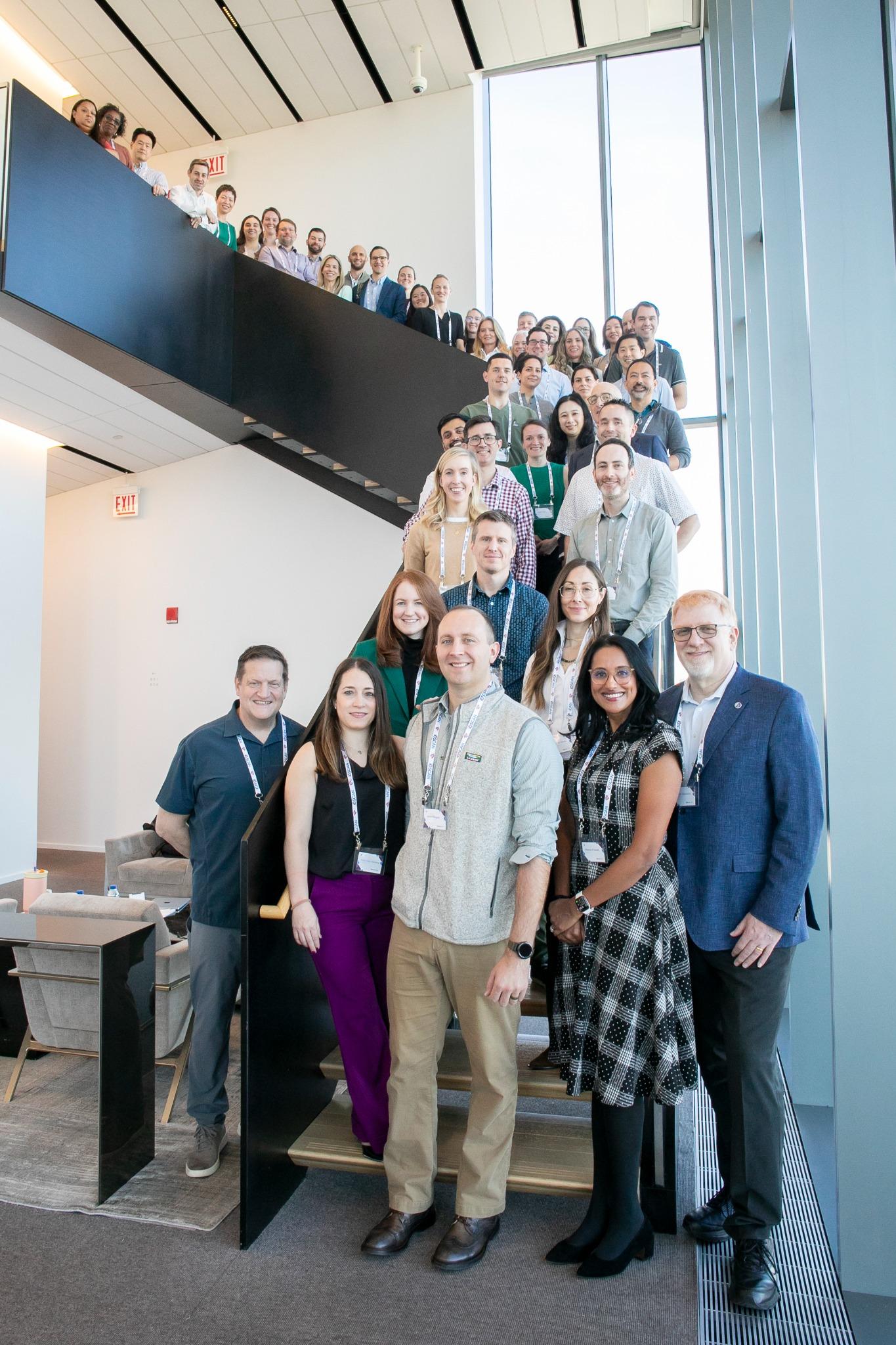
November 9 marked an important step toward bringing intestinal ultrasound closer to veterans and other patients receiving inflammatory bowel disease care across the VA and Department of Defense healthcare systems. In Chicago, 30 adult gastroenterologists and advanced practice providers from 11 VA hospitals and 5 DoD hospitals gathered for iUSCAN’s Phase 1 Introductory Hands-On Course.
The goal reaches well beyond one day of training: build the skills, support, and local scanning experience needed to introduce IUS across a coordinated network of 16 hospitals. Chicago provided a successful start, connecting an introductory eLearning foundation with six hours of in-person teaching, including didactics and three hands-on sessions.
A shared foundation before the first scan
Participants completed introductory eLearning before arriving in Chicago. That preparation created a common starting point for the course and allowed the in-person experience to focus on putting concepts into practice. Moving from an ultrasound image on a screen to acquiring that image yourself is a substantial step. The introductory course gave learners dedicated time to begin that transition with faculty support.
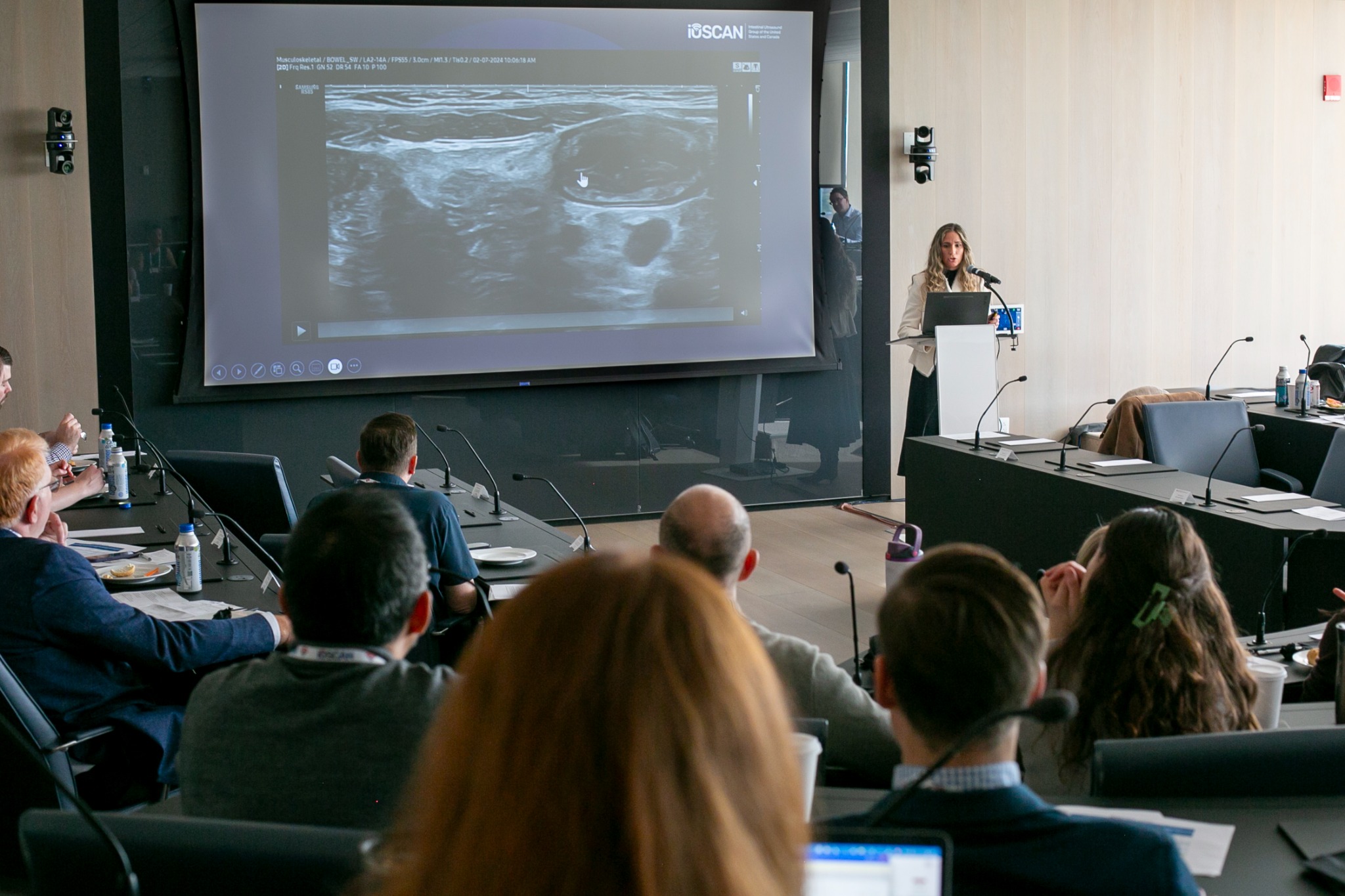
Bringing gastroenterologists and APPs into the same pathway also reflects how IBD care is delivered. Building IUS capacity across clinical teams creates opportunities to make the technique part of everyday care, supported by shared expectations for training and competency.
Six hours of learning, with hands-on practice at the center
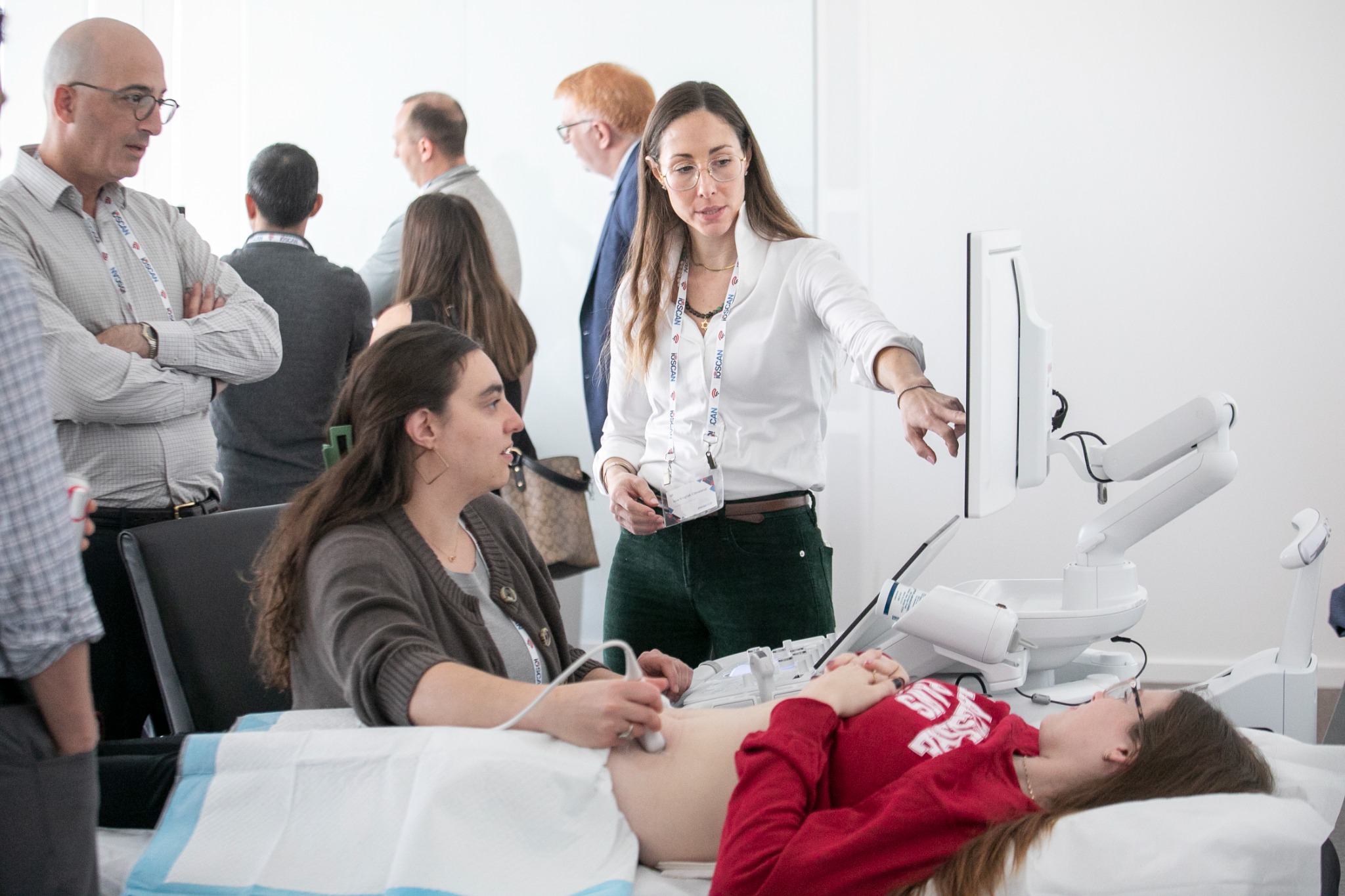
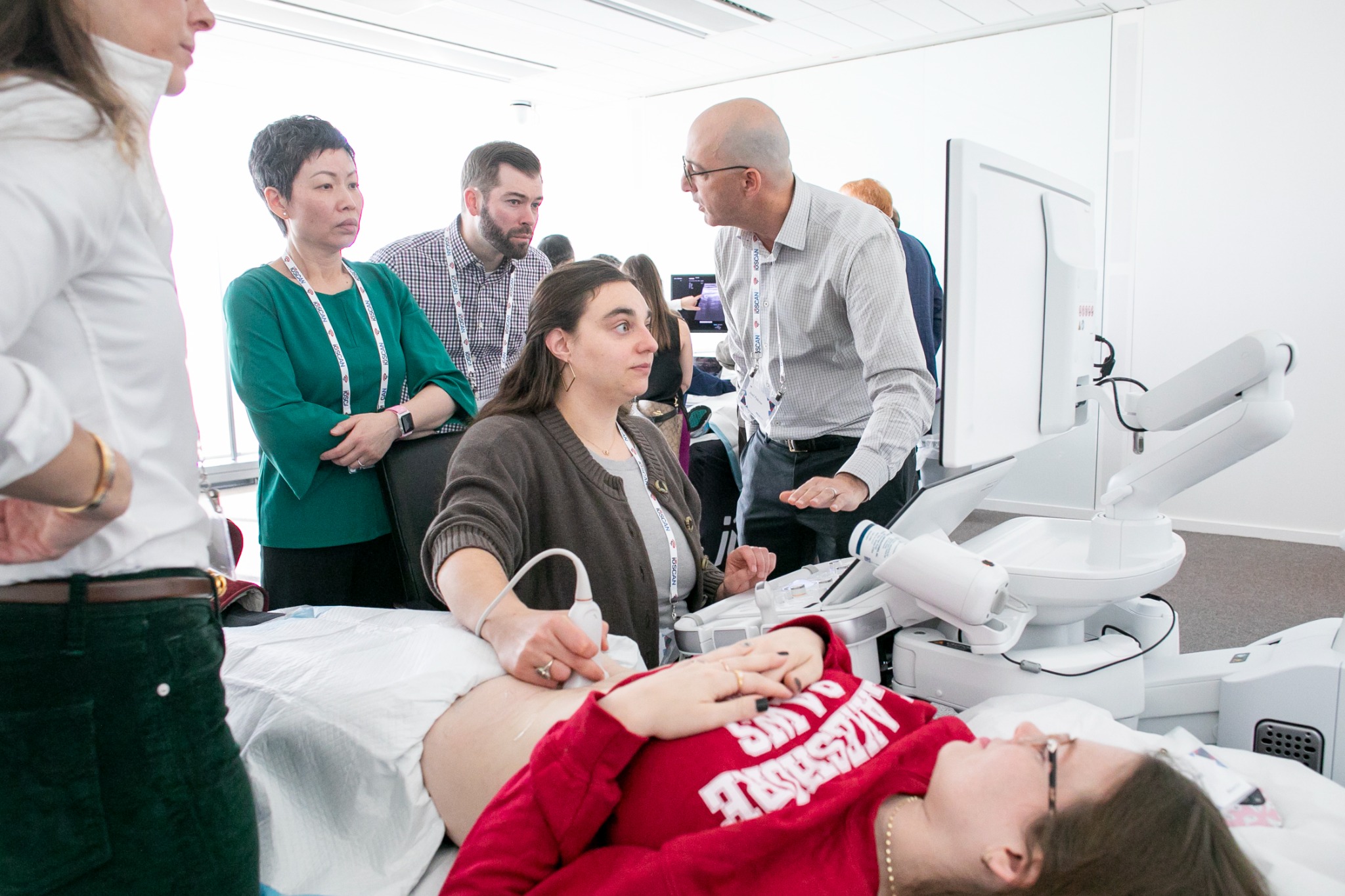
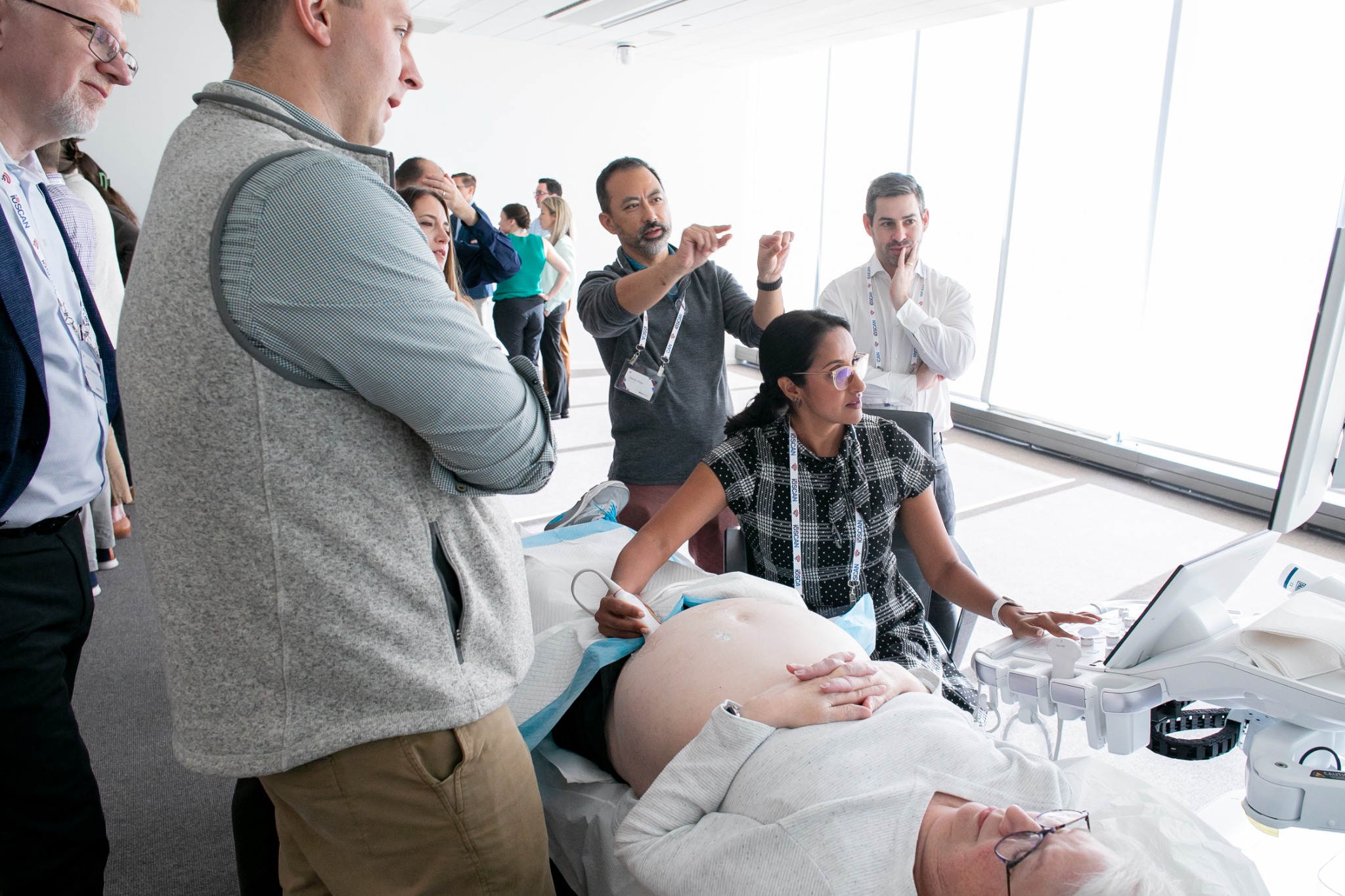
The Chicago course paired focused didactic teaching with three hands-on sessions. Learners had repeated opportunities to work with the probe, connect anatomy to the ultrasound image, and receive feedback as they began developing a systematic approach to scanning.
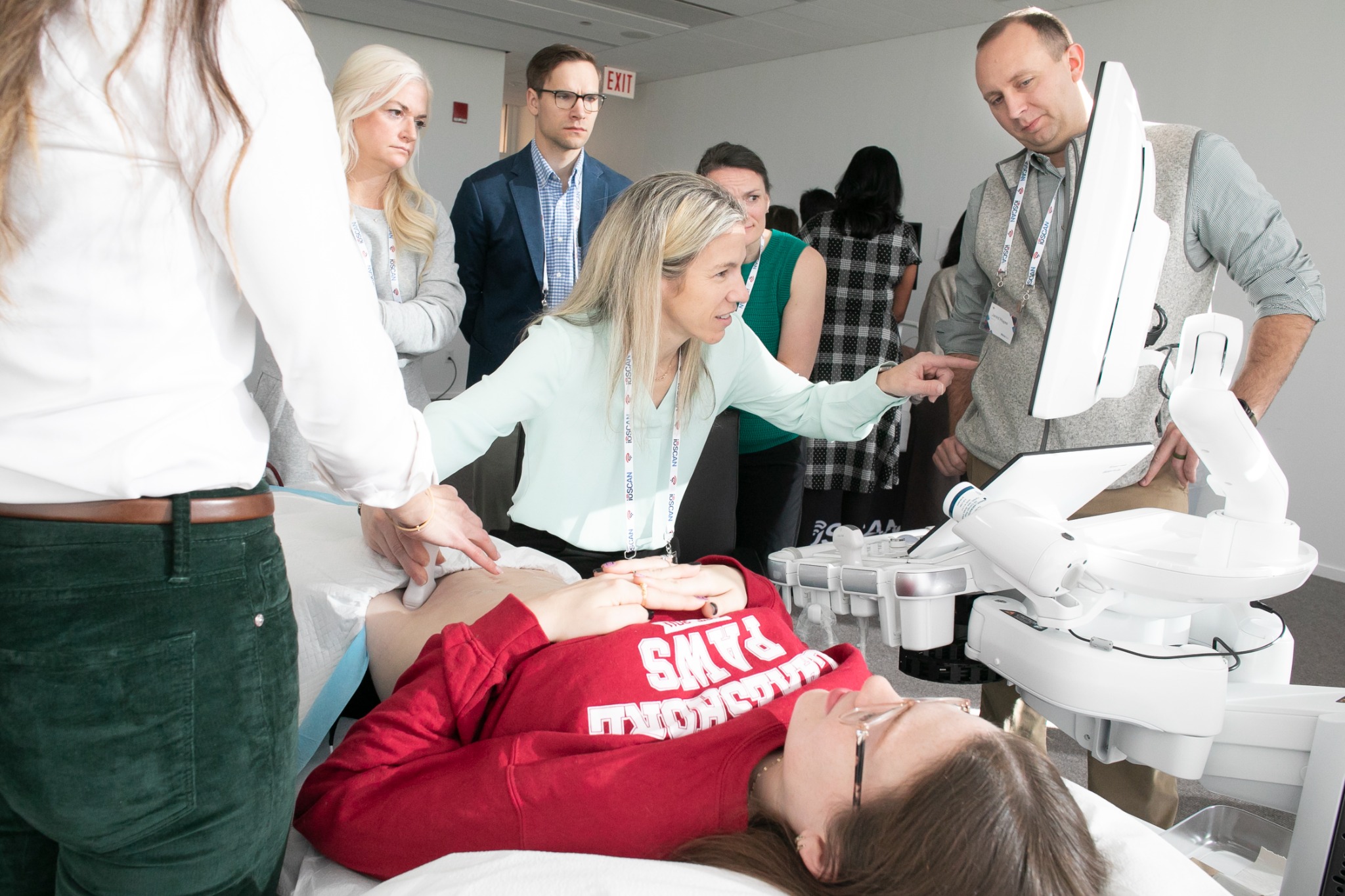
That repeated practice is central to the Phase 1 experience. A demonstration introduces what an examination can look like; time at the machine helps learners understand how to produce the images themselves. The three sessions gave participants room to practice, ask questions, and return to the technique with a clearer sense of what to work on next.
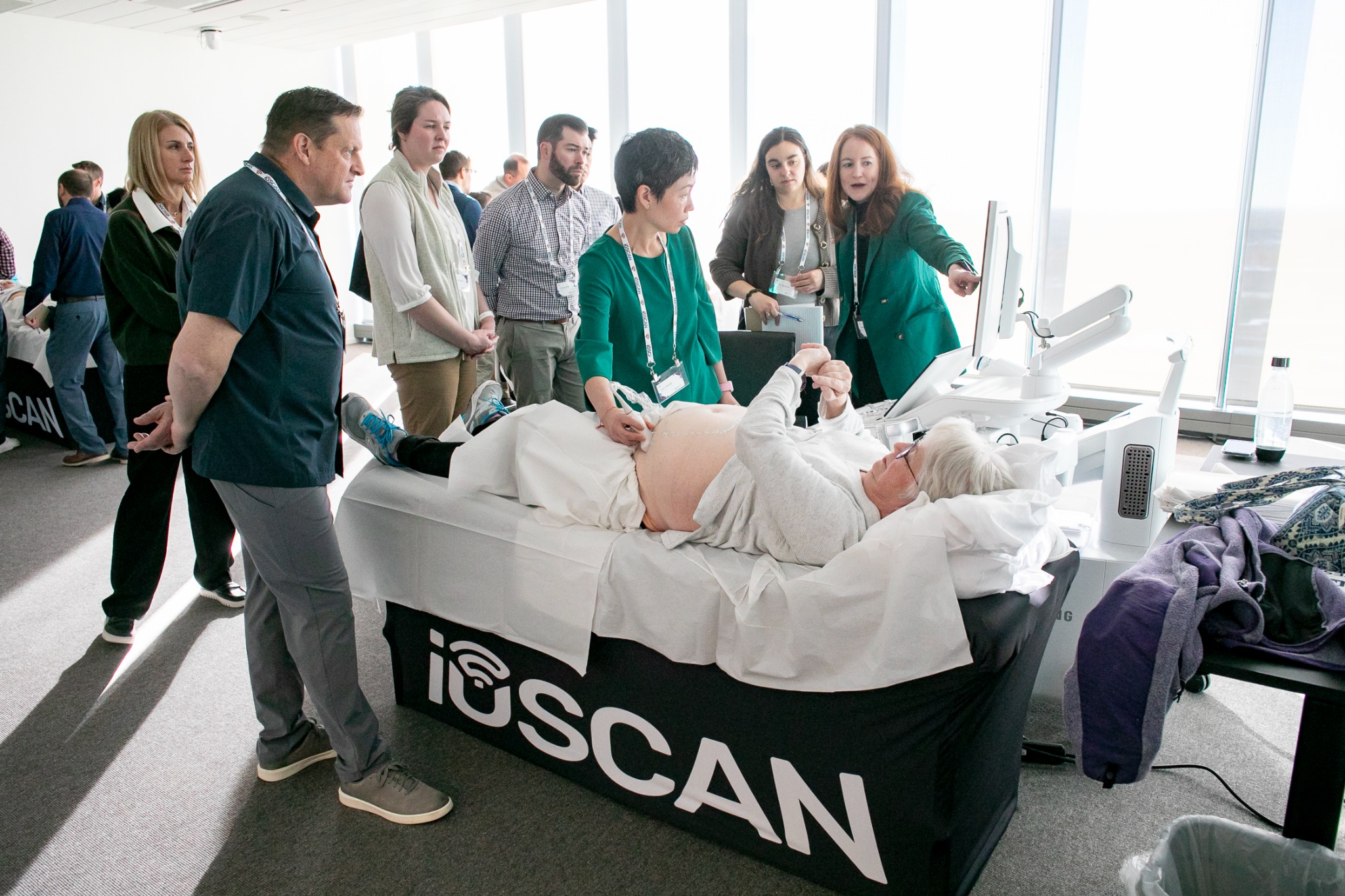
The course’s success was an important starting point for a much larger effort. Thirty clinicians returned to their institutions with an introduction to IUS and a defined pathway for continuing their development over the coming year.
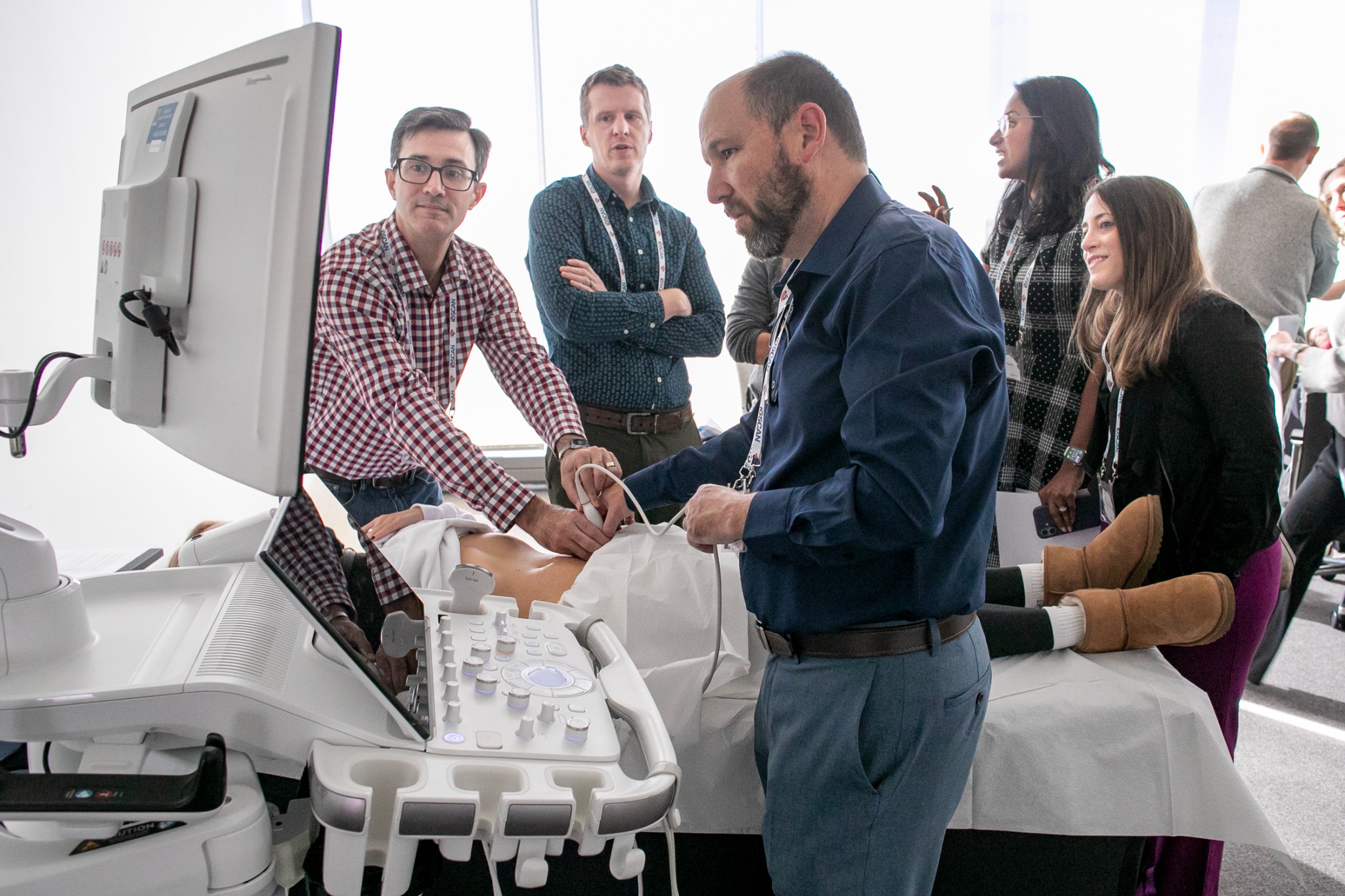
From Chicago to local practice
The next phase takes place where these skills will ultimately be used: at the participating VA and DoD hospitals. Learners will begin scanning locally, supported by Samsung ultrasound machines and online virtual coaching through iUSCAN.
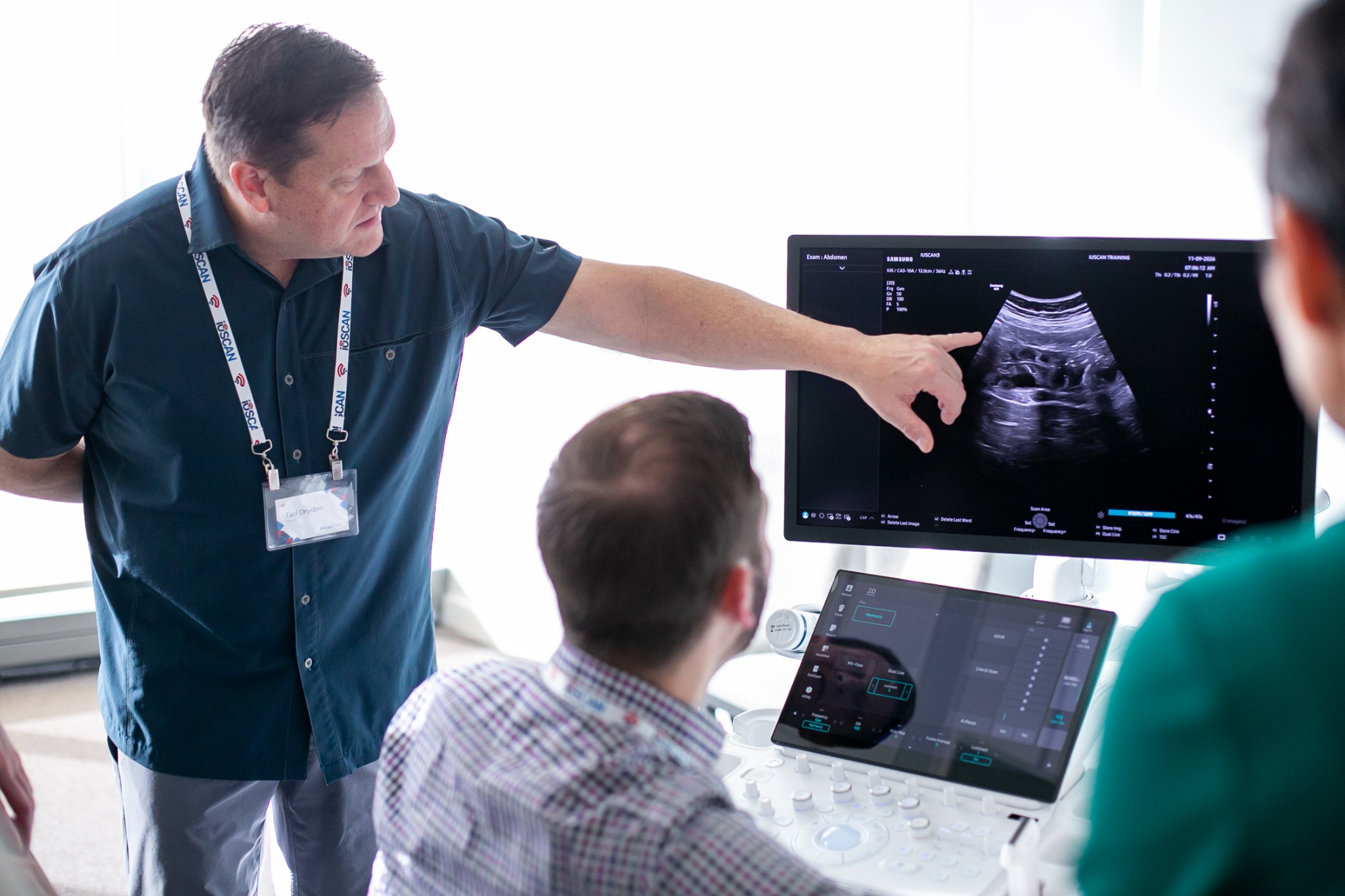
Access to equipment and continued coaching connects the introductory course to sustained practice. Local scanning gives learners the opportunity to build experience in their own clinical environment, while virtual coaching provides a way to review examinations, discuss challenges, and receive feedback between in-person meetings.
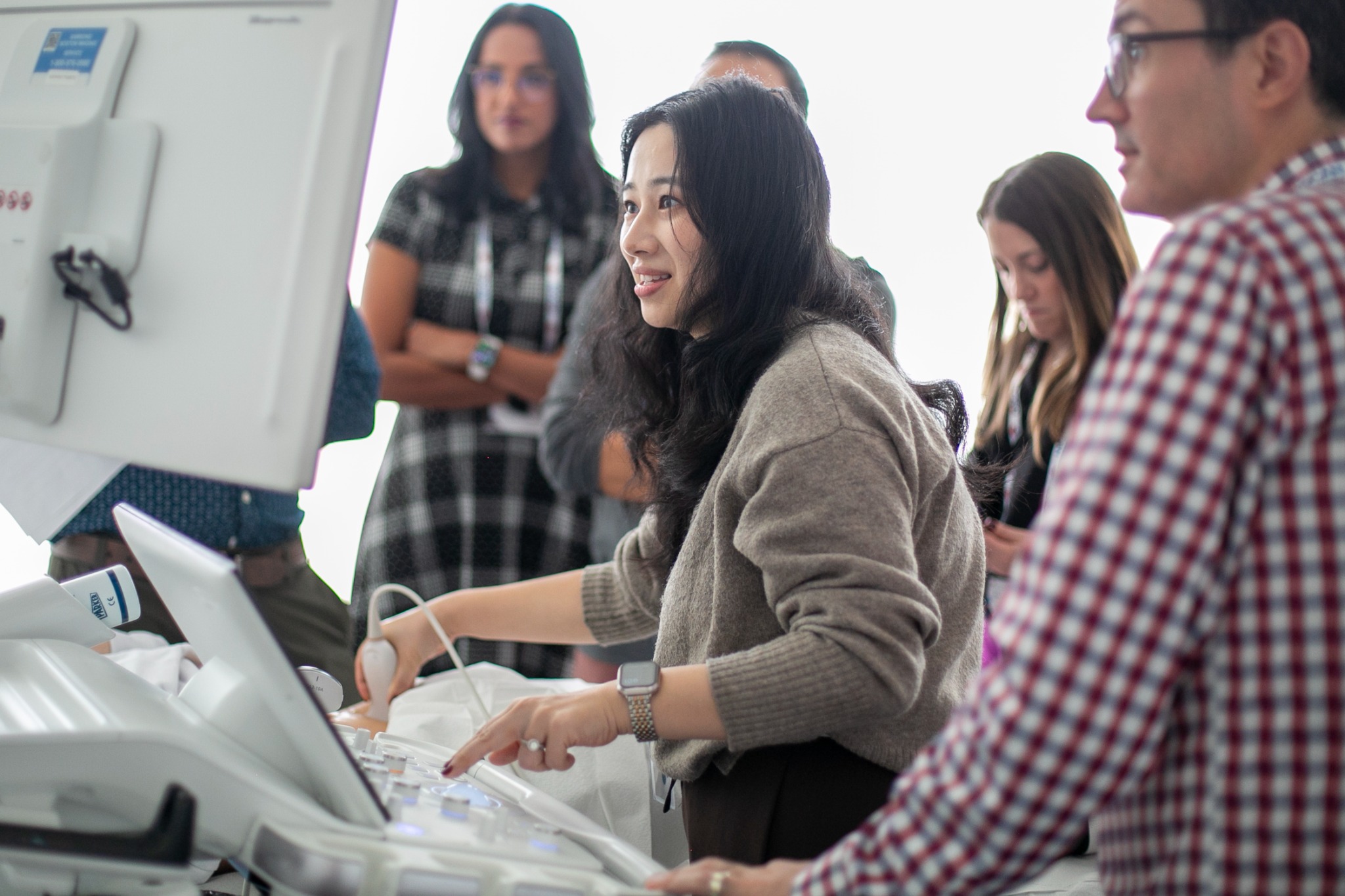
This model is designed to support a geographically distributed cohort without requiring a prolonged training placement at an outside expert center. Learners develop their skills at their own institutions while remaining connected to a structured educational program and a community of faculty and peers.
A year-long pathway toward demonstrated competency
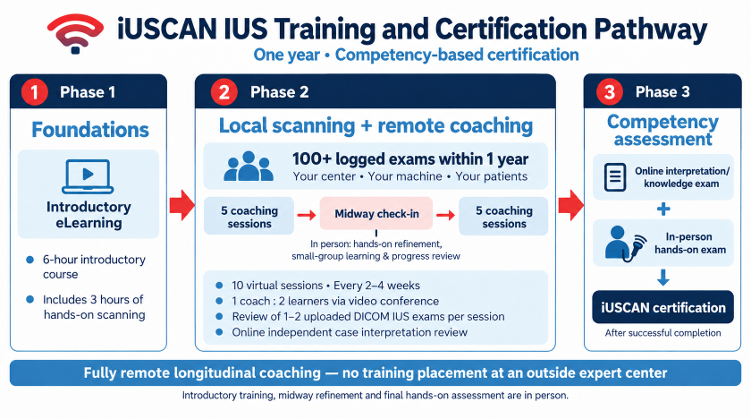
Phase 1 is the foundation of iUSCAN’s training and certification pathway. The pathway then combines local scanning, remote coaching, an in-person midway checkpoint, and final competency assessment.
The training framework calls for more than 100 logged examinations within one year, with ten virtual coaching sessions divided around the midway check-in. Coaching includes examination review and ongoing feedback, alongside independent online case interpretation. The emphasis throughout is on measurable skill development and the ability to perform and interpret an IUS examination.
March: a checkpoint for progress
The cohort will reconvene for a midway checkpoint in March 2027. This session will assess progression toward specific training milestones, identify areas that need additional practice, and provide further hands-on refinement.
The checkpoint gives both learners and faculty an opportunity to take stock before the final stage of training. It connects the experience gained through local scanning with direct observation and feedback, helping each learner understand their progress and priorities for the months ahead.
Following the checkpoint, participants will continue scanning and receiving virtual coaching as they work toward hands-on certification within the year. Final certification includes an online interpretation and knowledge examination and an in-person hands-on assessment, with certification awarded after successful completion of the pathway requirements.
Building access across VA and DoD healthcare systems
The significance of this initiative lies in its coordinated approach. Training clinicians from 16 hospitals within a shared framework creates an opportunity to develop IUS capacity across healthcare systems, with consistent educational expectations and continued support beyond the introductory course.
For veterans living with IBD, the aim is to bring non-invasive assessment closer to the clinical encounter and make IUS increasingly available within the systems where they already receive care. The work ahead will turn the foundation established in Chicago into local experience, demonstrated competency, and sustainable clinical services.
iUSCAN is proud to support this effort alongside the participating VA and DoD teams. Their commitment to a year of training is a commitment to building new capabilities for the patients they serve.
The people behind the progress
We thank the learners, faculty, scanning volunteers, program coordinators, and participating institutions who made the Chicago course possible. We also acknowledge Samsung’s equipment support for learners’ local scanning.
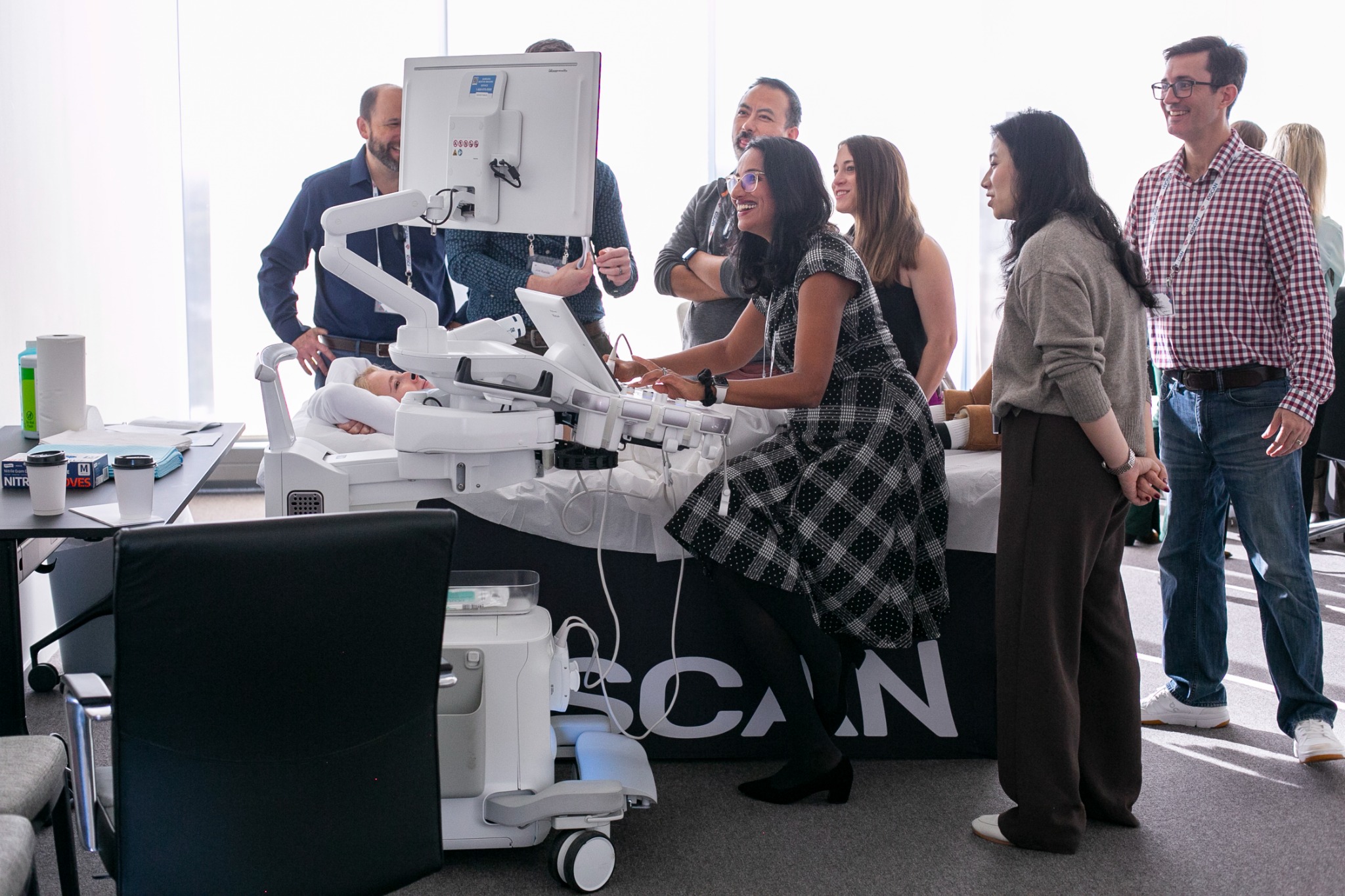
Chicago brought this cohort together for the first step. The next chapter will unfold across 11 VA and 5 DoD hospitals, as clinicians practice locally, learn with their coaches, and work toward competency-based certification. Together, we are building the training infrastructure to bring IUS to veteran IBD care at scale.